Your Subtitle text
ADHD

New Hope for ADHD
Choosing Movement Instead of Medication

By Sonia Story

 A mother of a twelve-year-old boy who is taking medication for ADHD recently cried on the phone, "I was one of those mothers who swore that I’d never give my son medication." Another mother lamented that her teen son has been on ADHD medication for 8 years. He is still struggling with school, but cannot take any more medication because of liver problems that are likely due to side effects from the medication.

What can we offer to these parents and children that is effective, healthy, and enjoyable? Movement instead of medication.

Brain-based movement programs integrate the nerve, sensory and motor systems that are the foundation for our ability to focus and learn.

These same movement programs are effective in overcoming ADHD.

How Does ADHD Occur?

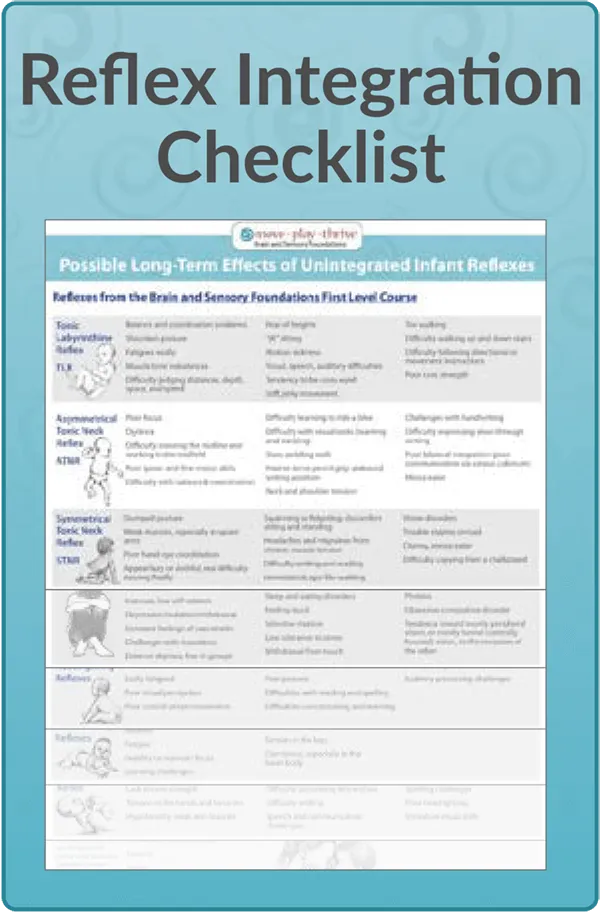
Before we understand how movement can be effective in transforming ADHD, let’s look at a psychiatrist’s explanation for what happens in the developing brain of someone with ADHD challenges. Psychiatrist Harald Blomberg, MD says one main reason that ADHD occurs is that stressors in the womb, birth, infancy or childhood, can cause a disruption in the automatic baby movements, called reflexes. The reflex movements are critically important. Among their many "jobs"

the reflex movements facilitate the growth brain and nerve networks, develop the sensory systems, and train the body for coordinated balance and movement—all of these are basic building blocks for later learning skills.


If the reflex movements are disrupted from doing their many jobs, it can cause learning, emotional and health challenges for the growing child that persist in later years. Dr. Blomberg says that if the disruptions to the reflexes are severe enough, the brain is unable to mature properly causing conditions like ADHD, Dyslexia and Developmental Delay. Unfortunately for today’s children there are many ways their reflex movements can be disrupted including stress, C- Sections, cordless phones (and other electromagnetic frequencies), illness, injury, vaccine traumas, environmental toxins, and restricted movement such as time spent in plastic carriers, car seats, walkers, swings and propping devices.

Dr. Blomberg says that a child with ADHD lacks complete brain maturity. In some ways, a child with ADHD has a level of brain maturity similar to that of a young toddler. To illustrate this, Blomberg points out that nearly all of the characteristics of ADHD— impulsivity, distractibility, inability to sit still, difficulty following directions—are seen in toddlers. We would never expect a toddler to sit quietly and focus for long periods without moving or being distracted. Dr. Blomberg says there are other similarities between those with ADHD and toddlers—they both have challenges with balance, low muscle tone and difficulty doing coordinated, smooth, rhythmical movement. Fortunately, we can use specific movements for bringing about the maturation of the reflexes and the brain. By doing theses movements we develop and strengthen the basic skills required for learning and emotional balance, no matter what our age or skill level.

How Movement Therapy Can Effectively Eliminate ADHD

By the time a child is 7 or 8 years old, we expect them to have the skills for learning, but often they do not, and schoolwork becomes a struggle. These children are bright, sensitive and creative, yet they find learning difficult. Instead of prescribing drugs in these instances, Dr. Blomberg prescribes Rhythmic Movement Training, a type of movement therapy he developed that specifically addresses the infant and childhood reflexes.

Dr. Blomberg postulates that Rhythmic Movement Training works by producing the following affects on the brain/body system.

Maturing of the brain by establishing links from the brainstem to the higher brain centers for impulse control, higher- level thinking, and emotional balance.

Increasing nerve nets for faster processing of information and sensory input.

Balancing neurotransmitter output.

Increasing coordination between the sensory, motor and nervous systems.

Increasing the ability to focus and filter out distractions.

Uplifting the mood and enhancing health and stamina.


Dr. Blomberg has a long track record of success in Sweden helping children and adults overcome ADHD and many other learning challenges through Rhythmic Movement Training. (The affects of movement therapy are so beneficial that Blomberg has used it to help adult clients recover from schizophrenia and protracted psychosis as well. He documents these cases in his book, Helande Liv, which he is currently translating from Swedish to English).

Dr. Blomberg tells the story about how one of his clients overcame ADHD with Rhythmic Movement Training (RMT).

One of my patients had been on medication for 6 years since he was six, when he was diagnosed with ADHD. In spite of the medication his
symptoms only got worse. He had severe temper tantrums, severe attention problems, impulsivity, etc. He attended school in a special class with seven students and five adults. After 8 months of doing RMT he joined a regular class and after 18 months he functioned perfectly. Recently he went back to the child psychiatric clinic to get his diagnosis cancelled. He made all the diagnostic tests and it was established he no longer had ADHD. You can expect great improvement and even total recovery from ADHD, using RMT.

(See www.rhythmicmovement.com for more information on Dr. Blomberg’s program. Note: Dr. Blomberg also acknowledges the importance of diet and nutrition in overcoming ADHD)

© Sonia Story, 2008 • www.moveplaythrive.com

Web Hosting Companies